
Is it enough to simply have a job, an office
or organization to work in, and get a get a cheque and the end of the
week? Not anymore. A
workplace however large or small has to be driven by efficiency and achievement
that manifests itself in the form of tangible results for the organization, and
is rewarding for the employee. Less productive inputs and lower efficiency
levels are bound to affect the business and jeopardize its sustainability and
survival.
Employee productivity
is a major concern for employers and lower productivity cannot be
blamed on the employee entirely.
·
A lot of it has to do
with the environment at the work place, and the work conditions along with a
series of factors that define the work culture.
·
Employers have to
implement wide spread changes in their setup to improve the productivity of
their work force.
·
Employee talent is a
valuable asset for a company or organization, and it needs to be tapped to its
fullest by keeping the employees motivated to perform and deliver the results
they are qualified for and capable of.
·
Employers may often
believe that once they have recruited the best talent in the field, the results
will inevitably follow. Not necessarily, if you look beneath the surface to see
the environment this talent works in.
A few factors that can
help to improve the employee productivity at the workplace are:
Every employee needs to be well aware that he
is accountable for his actions and decisions, and he can neither pass the buck
or pass the blame to someone else.
·
This will help him
work more meticulously ,
·
Take cautious rather
than reckless decisions, and not take advantage of his place, position or
relationship with his superiors.
# 2. Follow up
Employers often set targets and feel their job
is done.
·
No, every target or
milestone set needs to be followed up as well, to see if the progress is
sufficient and if not, whether any interim measures can be taken before it is
too late to salvage a situation.
·
It also keeps the
employee on track, ensuring there is consistent effort throughout the
lifetime of the project
# 3. Manage the
work force but avoid micromanagement
It is well known that a large pool of
employees does need to be managed, provided direction and given assistance. But
with this they must also be trusted, given freedom to operate in their style
and adopt measures which they think are the best to deliver results.
·
This freedom to act as
they deem fit helps to keep them encouraged, motivated and happy in the belief
that they are trusted.
·
Micro management is a
human tendency but one that is detrimental to achievement, since it makes mere
puppets out of employees, who are expected to toe the boss’ line and not think
for themselves.
·
Employees need to
think for themselves, analyze the consequences of every decision or action to
be able to give their best to their jobs. And the employers must make it
possible for their workers to do so.
#4. Encourage,
motivate, reward and recognize
The employer must ensure that on his part he
always has words of encouragement for his staff. Encouraging them helps them
move forward and do even better, and makes the worker feel happy. Innovative
ways of motivating them spurs them even more. For example, holidays or
conferences paid for by the company have been found to motivate employees
immensely.
·
Rewarding the hard
work put in by employees makes them continue to work in the same fashion, and
if the employee feels that his work is not appreciated in words or in material
terms, he may gradually stop doing so, since he may feel that others working
less are given the same too, so he need not work more.
·
Rewards, and other
ways of keeping employees happy makes them feel that their effort is being
recognized and that they are needed by the company.
·
Without these, they
may soon start looking for greener pastures and new jobs.
# 5. Reach out to
employees by seeking them out
Every employee loves to feel he has the ears
of the management who will recognize him and listen to what he says. Display of
inter personal skills in which the boss appears humane and one of them, rather
than a larger than life, distant figure, helps to have employees warm up to him
and feel happy working for him.
·
A bit of effort to
reach out helps them all do better.
·
If this extends beyond
the work place it may prove to be even more encouraging to increase employee
productivity.
# 6. Demand
realistic targets
Employers need to set realistic goals that are
within the limits of achievement. While an aggressive employer may want his
people to outstretch themselves to achieve farfetched goals, it may also burn
them out.
# 7. Team work
Team work always helps in increasing workplace
productivity since there is more input in the form of more ideas and minds at
work. Working alone is not always the happiest situation either,
especially in the field. Successful team building and working together is bound
to bring out the best out of the employees who may also then compete with each
other ensuring the business is the winner.
# 8. Ensure that
people enjoy their work
The best performing employee is the happy
employee, and the employer has to find ways of making his people happy. Besides
working conditions and the work culture implemented, he has to devise ways of
making the work seem challenging and interesting rather than mundane and
boring.
# 9. Break the
monotony and rotate
While employers assign tasks according to an
employee’s core competence, even the task they are best at, can make an
employee bored and his work seem monotonous.
·
This monotony can be
broken with rotation and giving people new tasks and exposure to other
divisions.
·
This adds their
learning and helps them get a holistic view of the business.
# 10. Courses and
improvement options
Employees are delighted when they can enhance
their skills and get additional learning opportunities sponsored by the
employer. This helps them learn, feel indebted for the money being spent on
them, which also adds to their resume, and are obliged to perform better by
applying all the knowledge gained in these courses.
# 11. Spend less
time on meetings and more on action
The current trend to have more meetings and
discussion rather than spending more time working to achieve results, leads to
precious productive time loss.
·
Meetings for reviews
and sharing of ideas can be limited and kept short.
·
Employees should have more
time to show results.
# 12. Tools and
equipment to raise productivity
Finally, the workplace must have the best
machinery, devices and equipment that yield error free results in the minimum
possible time. Efficient electronic equipment with no connectivity issues and
breakdowns will help to save precious time. They should take the place of paper
work, and yield fast results. Some of these include:
·
Smart phones
·
Laptops
·
Tablet computers
·
Latest applications
and software that offers quick connectivity and access
·
Digital
recorders-these help to record thoughts and new ideas when they strike, when no
paper is available and the fear is of forgetting the idea
·
Bluetooth to stay
connected
·
Personal digital
assistants or PDA’s
·
GPS to stay on track
on the road
Thus the idea is to have devices that enhance
efficiency and subsequently productivity at the work place. The devices help to
reduce the response time, improve customer service and cutting costs, all
imperative for workplace productivity.
Related Articles
Change
is often necessary but can be frightening for your employees. Common reactions
to change include anger, denial, opposition and depression. As a manager, you must illustrate to your employees the benefits of change
so that they, hopefully, develop an excited and positive attitude. Point out
how change brings with it new ideas and opportunities as well as the chance to
shine as an important part of the company.
Promotes
New Ways of Thinking
Changes compel individuals to think in new and exciting
ways. Creative thinking benefits the workplace with the development of many
innovations and ideas that can be utilized to keep the company fluid, exciting
and fruitful.
Breaks
Monotony
A monotonous job bores employees who need to be given
variety to excel. Change often provides the refreshment a worker needs to refocus
his energy and increase his interest. Counsel employees on this fact as you
share their new responsibilities with them. Talk about the change in a
positive, energetic manner and compliment workers on their flexibility.
Presents
New Opportunities
According to Sandra E. Black and Lisa M. Lynch in a study
for the University of California-Los Angeles, the incorporation of changes such
as cross-training employees, flexibility in job descriptions and development of
specialized work teams can substantially increase productivity. More product
generally equals greater profits that can be enjoyed by both management and
staff. Promote the specific changes you are making by explaining how they will
benefit the finances of the company and each individual.
Encourages
Skills Growth
Changes can require
employees to master new skills so they can accomplish new duties. Provide the
means necessary for staff members to learn new software and methods for
completing particular tasks. Offer incentives such as tuition reimbursement to
employees willing to take classes that teach particular skills needed for the
expansion of your business.
Allows
Best Employees to Shine
Change shows the true
colors of your employees. Those who accept change with a positive attitude and
work hard to cope with the difference in their work environment are those you
want to retain. Unfortunately, there might be cases of employees who refuse to
accept the changes and work against the goals of your business. These are the
kinds of workers you cannot and should not rely upon. It's important to give
all your employees some time in coping with changes as these are challenging
even for the best workers. According to the Cytech Company, everyone
experiences emotional ups and downs before moving forward with energy and a
consistent positive outlook.
How to Boost Teamwork in the Workplace
Related Articles
A
workplace lives and dies on the synergy and cooperation of its employees. A
cooperative, functioning team leads to increased productivity, more efficient
problem solving and a fairer distribution of responsibilities. There is no one
right way to boost teamwork in the workplace. As every team is different and
every team member is an individual, you might have to try a few different
methods before you find what works for your workplace.
1. Resolve any
lingering issues that have impeded teamwork. If any team members are
disgruntled or holding grudges, you might experience friction among the team.
Smooth over issues with frank, open discussion. Allow the team to view any
debates from all sides and recognize the validity of each team member's input.
2. Bolster
communication skills. A team can't function if it can't communicate. Establish
an open atmosphere in which people aren't afraid to communicate. Do so by
leading team meetings with frankness and honesty and treating each team member
like an individual, not a machine.
3. Try team-building
exercises. Allow team members to get to know one another by sharing a bit about
their lives and background -- if team members can relate to one another,
they're more likely to look out for one another. Form a bond among team members
with activities such as bowling, softball or other recreational activities.
4. Consider sprucing
up the work environment. Ask team members what they'd recommend. Redecorate the
break room, increase natural lighting in the office, or add plants to the work
environment. A peaceful, comfortable workspace goes a long way in boosting team
morale.
5. Divide tasks
evenly among team members. If any team member feels she has an unfair workload,
it might lead to friction among the team.
6. Keep the team
invested in their work with regular team meetings. In each meeting, discuss
what you have accomplished and what you need to accomplish next. Make your
collective goals clear and specific. Analyze what the team has done well and
what it can improve. Offer solutions via brainstorming sessions.
7. Empower your team.
Consider the input of team members, and ask for feedback from each member; let
them know their voice is heard and that they are not just a cog in the system.
8. Encourage your
team. Show them you appreciate their work. Give compliments, and be specific.
Tell each team member what they are bringing to the workplace and why you
respect their work. Encouragement helps build commitment, a vital factor for
successful teamwork.
Importance of Teamwork at Work
Related Articles
Teamwork
in the workplace offers the company and staff the ability to become more
familiar with each other and learn how to work together. There are several ways
in which teamwork is important and vital to the success of the company and to
the development of each employee. Understanding those important elements will
assist in developing company policies geared toward encouraging team growth in
the workplace.
Delegation
A team that works
well together understands the strengths and weaknesses of each team member. One
of the benefits of strong teamwork in the workplace is that team leaders and
members become proficient at dividing up tasks so they are done by the most
qualified people. Without strong teamwork, it can be difficult for managers and
executives to determine which staff members can best accomplish job tasks.
Efficiency
Work groups and teams
develop systems that allow them to complete tasks efficiently and quickly. When
a task is handed to a well-trained and efficient team, the team's work pace
assures that the task will be completed quickly and accurately. This allows the
company to take on more work and generate more revenue without having to add
more staff. This becomes helpful when efficient teams from different
departments work together. Each team is well aware of its own abilities and the
groups can work together effectively as opposed to disjointed groups of
employees who may not be familiar with how to work together.
Ideas
Teams in the
workplace often meet to discuss how to solve company issues. When a team works
well together, it allows staff members to feel more comfortable in offering
suggestions. Team members become accustomed to processing brainstorming
information, and the company benefits from the variety of suggestions that come
from effective teams.
Support
There are challenges
each day in any workplace, and a strong team environment can act as a support
mechanism for staff members. Work group members can help each other improve
their performance and work together toward improving their professional
development. Team members also come to rely on each other and trust each other.
These bonds can be important when the team faces a particularly difficult
challenge or if the group is forced to deal with the loss of a team member
while still trying to maintain productivity.
How to Implement a Plan of Action to Strengthen
Teamwork
Related Articles
Most
businesspeople know that teamwork is important to success, but few know how to
encourage it. The difficulty lies in understanding how to implement changes in
behaviors. You can't simply suggest that everyone start thinking like a team
player. You need a plan of action to make teamwork a reality in your workplace.
You should use a step-by-step approach to strengthen teamwork and make it a
vital part of your company culture.
1. Identify the
behaviors that would lead to better team performance if people changed how they
did things. Look at lines of communication. Are people keeping each other in
the loop? Examine how leaders exercise their authority. Are they inspiring
people or making them resentful? Evaluate the loners on your staff. Can they
become team players if they are put in charge of a special project?
2. Take note of the
current behaviors that are positively contributing to teamwork. Take stock of
what is going right. Note any special efforts people make to be part of the
team and acknowledge the team's effectiveness.
3. Describe the gap
between what people are currently doing and what people should be doing to
strengthen teamwork in your organization. Communicate target behaviors. These
are transition behaviors from what is happening to what should be happening.
4. Call a team
meeting and discuss how to adopt the target behaviors. The purpose of the
meeting is not to come up with a plan to identify needed changes, you have
already done that by identifying target behaviors. The meeting should decide on
a course of action for all members to follow. Creating this plan will
strengthen teamwork and communicate strategies for implementing it at the same
time.
What Can a Manager Do to Promote Good Teamwork?
As
a manager, you need to exercise effectiveness and understanding when getting
the employees under your supervision to work together. Good teamwork doesn't
just spring up like lilies in the field, but with the right techniques, you can
encourage its development in your team. An atmosphere of trust and cooperation,
allows you to reach your goals on time and under budget. A few solid guidelines
can point you in the right direction.
Communication
Lack of communication
leads to frustration and ultimately a lack of effectiveness. Establish clear
lines of communication with all of your team members; ensure that they know
your email address and establish regular times when they can speak to you about
any problems or concerns they might have. Indicate that they can express
criticism if they need to, provided they are prepared to work on solutions to
the issue and not just complain. In the event of interpersonal conflict within
the team, be ready to step in as a mediator, listening to both sides and then
rendering a decision as fairly and impartially as you can.
Clarity
It is vital that each
team member understand the goals of his department and his specific role in
reaching them. Your team should know exactly what they need to do and the
specific techniques you expect for them to do it. Invest them in the goal: give
them a sense of pride in doing it well and ensure that they understand exactly
what that means. In addition, delineate responsibilities to your team members
clearly and with no overlap. Every team member should know what he is in charge
of and the resources he has at his disposal. This prevents friction between
team members and ensures that every duty in the project is met.
Trust
Your team members
need to trust both you and each other to work together. Demonstrate loyalty to
them -- speaking to upper management on their behalf if they require it -- and
express gratitude to them for doing their jobs well. Plan for social events
with the team in an informal setting, such as lunch on a set day of the week or
an enjoyable outing during a work day. Take care, however, not to intrude upon
personal time, or take team members away from their families for social
activities. In terms of their formal duties, challenge them to do well, but
don't push or badger them. It conveys that you trust them with their
responsibilities without riding them (or deriding them).
Problems
When problems arise,
address them quickly and impartially. If possible, anticipate potential
conflicts before they arise and nip them in the bud before they get out of
hand. For example, if two team members don't get along despite your best
efforts, try to assign them separate duties that don't require them to interact
very often. When addressing problems, keep both the team members and the
overall goals in mind: make sure your solutions address the team's goals, while
distributing the workload fairly and logically over the entire team.
10
Suggestions to Improve Organizational Climate
Spring
cleaning is a time-honored tradition for homeowners, so why shouldn't
businesses adopt this approach to give their organizational climate a fresher
and warmer feel? Here are 10 suggestions to improve organizational climate and
bring in sweeping changes to raise motivation and productivity.
·
Give Your Organization a Top to Bottom
Cleaning
Organizational
climate is the general perception of the working conditions of an enterprise,
including the level of motivation, innovation, trust, conflict, morale, rewards
equity, leader credibility, and resistance to change. Because organizational
climate develops over many years and is affected by many factors, you cannot
change it by simply dusting off the top layer of discontent or vacuuming up the
problems around the perimeter.
While
these tactics may remove the most obvious eye sores, you need to consider
suggestions to improve organizational climate that will refurbish the many
layers of the company's persona. Just as the most effective cleaning begins at
the top and progresses downward, so must the measures that will make sweeping
changes to the overall perception of the business.
·
What Shapes Organizational Climate?
Research
has shown that organizational climate is shaped primarily by five factors:
·
Motivation - the desire to pursue a goal combined with the energy to
stay committed even when faced with challenges and obstacles.
·
Change - the willingness to innovate and adapt in a continuously
evolving situation.
·
Teamwork - collaborative interactions in pursuit of the goal that
require both a sense of shared purpose and the right tools to be able to work
and communicate as a team.
·
Execution - the ability to achieve strategic results by implementing
effective tactics and keeping to a schedule.
·
Trust - the belief in the reliability, truth, ability, and
strength of the words and deeds of members of the organization that facilitates
necessary risk taking to achieve success in the other climate factors.
·
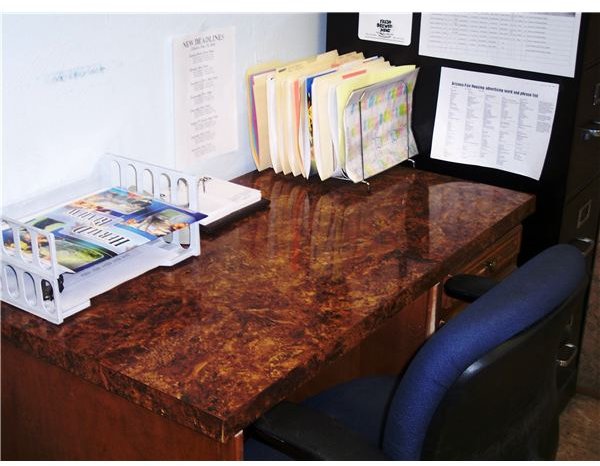
1. Motivation Begins with Decluttering the Workspace
The first suggestion to improve organizational climate
begins with removing unnecessary clutter. Clutter steals workers' motivation
because they expend all their energy just trying to find what they need to
begin a task. You can't expect to make significant progress to improving the
organizational climate until you declutter everyone's work area. If people's
desks are overflowing with paper, consider adopting some best practices in records management so that it will be easier to see what needs to be cleaned
up.
·
2. Institute Rewards Equity to Motivate
Employees
Once
you have removed the clutter as an obstacle to increasing productivity, the
next step is to determine and implement policies that will motivate employees.
There are many theories regarding what motivates employees, and you will find
that workers respond differently when presented a slew of performance
incentives. However, all workers will be more motivated if they believe there
is rewards equity within the organization. Eliminating the appearance of
favoritism and recognizing achievements that are not necessarily "high
profile" will go a long way to boosting the morale of workers.
·
3. Foster Innovation and the
Entrepreneurial Spirit
Can you turn an employee's regular job into an entrepreneurial
experience? The answer is yes, but it will take some creative thinking
and the willingness of managers to relinquish some control. Creating an
entrepreneurial spirit begins with transforming workers into the economic
engines of the company. One way to facilitate entrepreneurship is to set up
each department or team as a profit center and allow them to keep any profits
generated through savings or increased sales. Likewise, the company can offer individuals
in-house patents for innovative ideas and pay a royalty for the savings or
revenues generated from the patented idea.
·
4. Prepare Workers to Embrace Change
Resistance to change manifests itself into many symptoms that can create an organizational climate that is full of
stale air.
Opening the windows to let the fresh air into the
organization is not always easy, especially if those windows have been shut for
a long period of time. This is why it is so important that change becomes an
integral part of the organization's culture. Try to designate spring as the
annual time of year for reviewing and instituting new procedures and processes.
If change is on everyone's seasonal calendar, it will not take anybody by
surprise.
·
5. Create a Sense of Purpose
Organizational
climate is enhanced when coworkers feel a connection or bond with their
colleagues. Even if each employee has a different job within the organization,
there needs to be a unifying, core purpose in what they do that is tied back to
the organization as a whole. For example, scrubbing the floors, cleaning the
windows, and dusting the furniture are very different jobs that require an
assortment of tools. However, they are all connected to the unifying purpose of
having a clean and beautiful home. Connecting the dots so employees understand
and visibly see how their work is related to the broader picture will do
wonders for morale.
Continue to the next page for more suggestions
to improve organizational climate.
·
Is the climate in your organization
cold and impersonal because employees don't trust management or each other and
nothing seems to get accomplished? Then here are some suggestions on how to
turn your organizational climate into a tropical paradise by restoring trust,
leadership credibility, rewards integrity, and employee empowerment.
·
6. Provide the Right Tools for
Effective Collaboration
We know that teamwork depends on the ability to effectively
collaborate with one's coworkers in an environment best-suited for the exchange
of information. In an ideal setting team members would be sitting around in
chairs facing each other in a room without distractions and interruptions. But
the reality is that we work in a world of telecommuters and multitaskers and
therefore businesses should look into purchasing
some affordable collaborative software to strengthen teamwork. You would not use Windex to scrub the floors, so don't
expect your employees to collaborate without adequate tools to effectively
communicate and share information in real time.
·
7. Empower Employees for Better Execution
Employees want to feel that their work
is valuable and they have some control in the final product. Empowerment leads
to better execution because employees who are closest to the work product are
able to address problems faster and have more ideas on how to improve
efficiency. While empowerment
can take multiple shapes and forms, it
generally creates positive perceptions of the employer/employee relationship
within the organization. Empowerment will give an organization that fresh scent
of a good spring cleaning.
·
8. Find Periodic Downtime to Improve
Execution
It
may sound counter-intuitive to take a breathier to improve execution, but think
about how the game of basketball is played. No coach is going to leave his or
her five starters in during the entire game. Businesses should take a lesson
from the sports, such as basketball, to ensure that employees don't suffer from
burnout either mentally or physically.
·
9. Develop Honest Communications to
Build Trust
Make
sure the organization communicates clearly and often to the employees about the
true state of affairs, including the
mission, goals, financial position, achievements and
missteps of the organization. No one likes bad news, but trust will never
flourish in an organization that refuses to air its dirty laundry. Keeping
workers in the dark about the true financial health of the company only creates
rumor-mongering.
·
10. Promote Ethical Behavior
Even high performance teams cannot be
maintained in an atmosphere of unethical behavior. So how can your organization
foster trust? There are several practices that build trust at both the
individual and organizational level. First, you need to put into place
personnel procedures that produce the desired ethical behaviors and swiftly
disciplines those who step outside these boundaries. If you don't have one,
develop a workplace ethics policy to ensure that boundaries and the consequences for
transgressing those boundaries are specified with clarity. If you already have
a policy in place, take time during the spring to review the policy to see if
it needs to be updated.



No comments:
Post a Comment